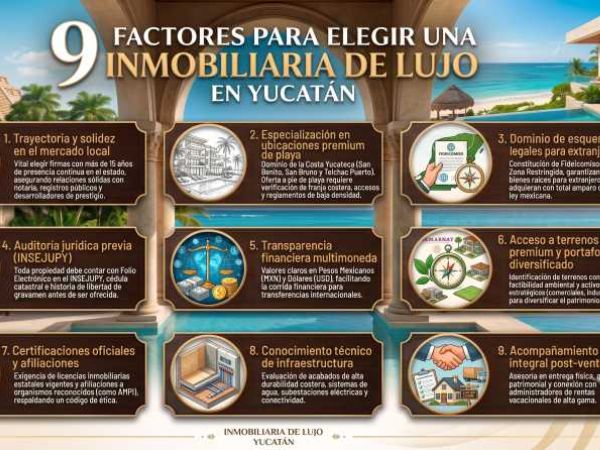
For a premium residential purchase in Yucatán, choose an advisor who begins with your intended use and constraints, can explain the local residential market without broad promises, puts commercial information in writing, and coordinates the buying process without replacing your notary, technical inspector, tax adviser or other specialists. For a coastal home, villa or condominium, ask for property-specific evidence at every stage rather than relying on a “luxury” label.
A primary home, a weekend property and a second residence have different decision criteria. Tell the advisor whether you expect to live there year-round, use it occasionally, host family, or keep the option of renting it. Add your preferred setting, property type, access needs, level of privacy, maintenance tolerance and target purchase timing. A useful brief also states what is non-negotiable and what can change.
Turn the brief into a short list of comparable homes, villas or condos. There is no universal “best area”; compare each property’s documents, condominium rules if applicable, access and ongoing obligations. Ask why it fits and what remains unconfirmed. This is residential guidance, not an industrial checklist for warehouses, logistics or business operations.
Request the scope in writing: search, property information, visits, offer coordination, negotiation, document collection, communication with the seller and support through closing or handover. Ask how the advisor is paid, when any fee becomes due, whether conflicts or dual representation can arise, and who remains available after signing.
A serious comparison should go beyond photographs and a list price. Ask for the same fields for every option: ownership and seller information available at that stage, included fixtures, surface descriptions, condominium charges if applicable, condition, access, utilities, delivery status and open questions. If a fact comes from an advertisement rather than a document, it should be labelled as unconfirmed.
Ask for the source and date behind statements about price, availability, services, permitted use or future value. Treat a listing as a starting point, not as proof. A useful advisor labels each item as documented, seller-reported or still pending and avoids guaranteeing appreciation or rental income.
The advisor does not replace independent legal, technical or tax advice. The role is to organize information and keep the next step visible. PROFECO’s guidance for home buyers recommends checking ownership and liens, permits, plans or structural information, property characteristics, payment options, expenses beyond the price, cancellation terms and guarantees; it also advises checking the contract’s registration when applicable. Read the official PROFECO guidance for housing buyers and the NOM-247-SE-2021 published in the Diario Oficial de la Federación. Ask your advisor to prepare a document request, but let the notary and qualified specialists interpret the legal and technical results.
If the residence is within Mexico’s restricted zone, the Secretaría de Relaciones Exteriores explains the residential fideicomiso framework: foreign nationals cannot acquire direct title to land within the statutory coastal strip, and residential use and enjoyment are structured through a trust, public deed and an authorized term. Confirm the exact location, ownership structure, bank, documents and current requirements with the notary and fiduciary bank for the specific transaction. This is general information, not legal advice.
A clear residential process usually has visible stages: written brief, market search, comparable shortlist, guided visits, evidence and questions for each property, offer, document review, contract, closing and physical handover. Ask what you will receive at each stage and who is responsible for the next action. If the advisor cannot explain how an unresolved item will be tracked, pause before paying a deposit or signing.
For context, review the company’s residential and regional profile, browse the coastal homes and apartments listed on the site, and use the contact page to send specific criteria.
There is no useful universal number. Ask for a small, reasoned comparison tied to your brief, with gaps and verification points clearly marked. More listings do not automatically mean better advice.
No responsible process should guarantee those outcomes. Ask for the assumptions, date and source behind any market statement, and keep forecasts separate from facts documented for the property.
For an independent review, ask the notary and appropriate specialists what they need to examine. A real estate advisor can coordinate access and information, but cannot turn a listing or visit into a legal opinion, engineering report or tax recommendation.
Share your intended use, preferred setting, property type, purchase horizon and whether you are buying locally or from abroad through Yucatan Properties’ contact page. Request a property-specific comparison and a written list of documents and questions to verify before you advance.
Site Map
Newsletter