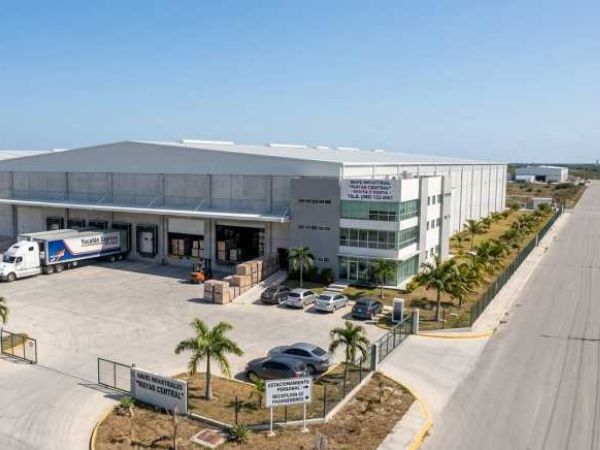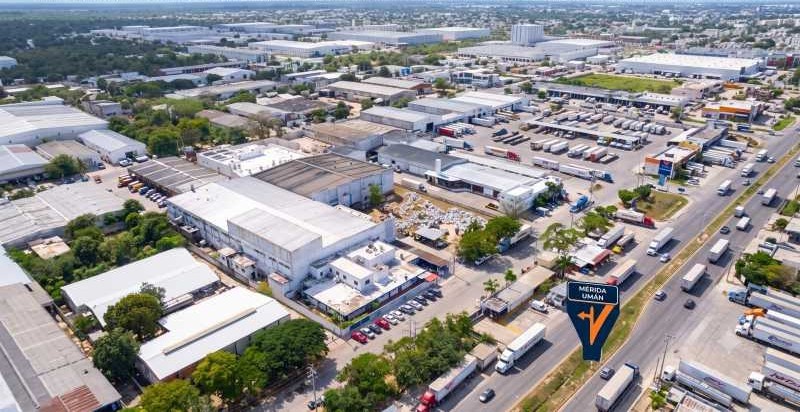
Choosing between Ciudad Industrial and the Mérida–Umán corridor is not a matter of simply labeling one area as the “better location.” The right location reduces operational friction involving routes, customers and suppliers, employees, access points, and utilities. Compare two or more properties using the same specifications, date, and reference vehicle; any information that has not been verified for a specific property should remain pending.
Start by listing origins and destinations: key suppliers, recurring customers, delivery points, related facilities, and employees’ home locations by shift. Include frequency, vehicle type, arrival times, and whether vehicles need to return to the property. This allows you to compare an urban distribution route with a regional freight route without reducing the decision to simply being “nearby.”
To map your route, consult the National Road Network of the Mexican Institute of Transportation, a digital, georeferenced map of the road network designed, among other purposes, to calculate routes. Then compare the origin, destination, intermediate stops, and vehicle type using the SICT Point-to-Point Route Planner. Do not present distances, tolls, or travel times as universal figures. Record the date, vehicle, and route consulted, and verify the final access road to each property.
A location may be attractive for one company but impractical for another. Ask your operations team for addresses and travel records from a typical operating period. Identify critical routes, delivery windows, and suppliers that use large vehicles.
INEGI's National Statistical Directory of Economic Units (DENUE) provides business identification, location, economic activity, and establishment size. Use it to identify nearby business activities, not to claim that they are customers, suppliers, or guaranteed sources of demand. Verify this information through contracts, purchase orders, addresses, and operational interviews.
Determine how many employees arrive per shift, where they commute from, and their arrival and departure times. Ask your team whether the commute is practical and review public transportation, parking, and lighting during actual operating hours. Document the route, time, and observed conditions; do not turn an impression into a promise.
Visit each property by driving from the main road to its entrance. Verify access width and road conditions, intersections, turning radii, slopes, restrictions, shared traffic, waiting areas, and separation between pedestrians and vehicles. Conduct the inspection using the type of vehicle you intend to operate, with proper authorization and without obstructing public roads. A highway connection does not automatically mean that your fleet can maneuver safely.
Request written confirmation of what currently exists and what can be contracted or expanded: electrical demand and voltage, water, drainage, telecommunications, backup systems, and maintenance. For medium-voltage service, review CFE's applicable requirements in its official connection guide. This guide does not certify the available capacity at a specific property. Request feasibility confirmation, a quotation, and estimated timelines from the relevant provider or authority, and consult a specialist if your process requires it.
Create a separate evaluation sheet for each property, including criteria, supporting evidence, source, date, status, outstanding costs, and the person responsible for verification. Assign weights according to your operation: urban deliveries may prioritize travel routes, while manufacturing operations may place greater importance on utilities, employee access, and freight logistics. Do not count an unverified item as compliant.
To evaluate the physical characteristics of a property, consult the checklist for warehouses and industrial buildings for rent in Mérida and, if you are considering land for construction, the guide on industrial land in Yucatán. The warehouse and industrial building listings in Mérida are only a starting point for exploring available properties. Confirm operating conditions, availability, commercial information, and terms directly before making a decision.
Not necessarily. It may be an option worth considering if your main routes, employees, and property access conditions make it suitable. However, the result depends on the addresses, schedules, vehicles, and verified conditions of each operation.
No. Evaluate the complete route, final access road, vehicle maneuvering conditions, restrictions, applicable tolls, and actual traffic conditions during operating hours. The nearest exit on a map may not be the most practical option for your vehicle or workflow.
Request the exact location, site plan and access measurements, delivery conditions, utility documentation, feasibility confirmations, applicable land-use restrictions, and any potential adaptation costs. Determine which specialist will review each item and document everything that remains pending.
If you would like to compare properties using this methodology, share your operational requirements, routes, vehicle types, shifts, and utility needs through the Yucatan Properties Contact Page. The goal is to organize available property options for your team to evaluate. No property listing replaces an on-site visit, document verification, or the applicable technical inspections.
Site Map
Newsletter